
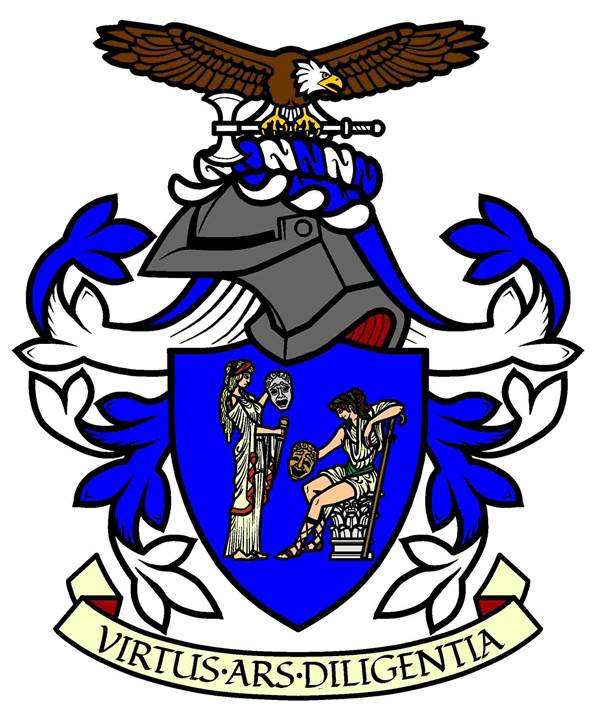
The motto is usually placed on a scroll or banner, either above the crest or below the shield in a coat of arms. The motto is a phrase or saying that reflects the values, beliefs, or guiding principles of the armiger (the person or family bearing the coat of arms). While not all coats of arms include a motto, when present, it adds a verbal expression of the armiger’s ideals, complementing the symbolic elements of the heraldic design.
After much anguish and several changes, I selected the motto in English: ‘ Strength, Creativity, Perseverance.’ These terms symbolize George and his family. Mottos are usually in English, French, or Latin, but they can also be in other languages. I chose to use Latin. Converting them to Latin took some work. Not all translators available online translate English to Latin the same way.
Due to language structure, vocabulary, and meaning differences, different words often appear when translating between English and Latin and then back to English. As an ancient language, Latin uses broader, more abstract terms than English, which can be more specific and nuanced. A single Latin word might encompass multiple meanings that English separates into distinct terms. As a result, when translating back into English, the process might select a word that is close in meaning but slightly different from the original.
Additionally, words evolve. Latin has heavily influenced English, but as languages change, meanings shift. This can cause variations in translation when Latin words are reinterpreted in modern English. Furthermore, Latin words often lack exact equivalents in English, leading to interpretative translations based on context. For example, a Latin term like fortitudo can mean “fortitude” and “strength,” so the back-translation may differ depending on how the translator understands its intended meaning. This flexibility in interpretation often leads to variations when moving between languages.
After some research, I settled on the Latin version of ‘Strength, Creativity, Perseverance’ to be represented as ‘VIRTUS, ARS, DILGENTIA’:
- VIRTUS symbolizes a broad concept of virtue, excellence, courage, and moral strength. Originally derived from VIR, meaning “man,” virtus was closely associated with qualities deemed ideal for a Roman citizen, especially a soldier or leader, such as bravery, honor, and valor in battle. Over time, it came to represent physical courage and the moral and ethical virtues that define a person’s character, including integrity, righteousness, and the pursuit of excellence. In Roman philosophy, particularly Stoicism, Virtus was considered essential for achieving a good and honorable life, having the sense of both moral and physical strength.
- ARS symbolizes art, skill, and craftsmanship, encompassing the idea of mastery in a particular field or discipline. It represents both the technical ability and creative capacity required to excel in an area of expertise, whether in practical skills, like craftsmanship or engineering, or in intellectual and creative pursuits, such as fine arts, music, or literature. Ars is often linked with the concept of learned and practiced expertise, emphasizing the blend of knowledge, technique, and creativity necessary to produce something of quality or beauty. It symbolizes the cultivated ability to create and achieve excellence through dedicated effort and understanding. ARS is a word with a sense of artistic ability and craft.
- DILIGENTIA symbolizes diligence, care, and attentiveness. It embodies steady, focused effort, persistence, and careful attention to detail. In a broader sense, it represents the virtue of working with dedication and responsibility, ensuring tasks are completed with precision and commitment. Diligentia reflects the importance of hard work and perseverance in achieving success and fulfilling one’s duties thoroughly and conscientiously.
 Echo's of Our Ancestors
Leave a comment