
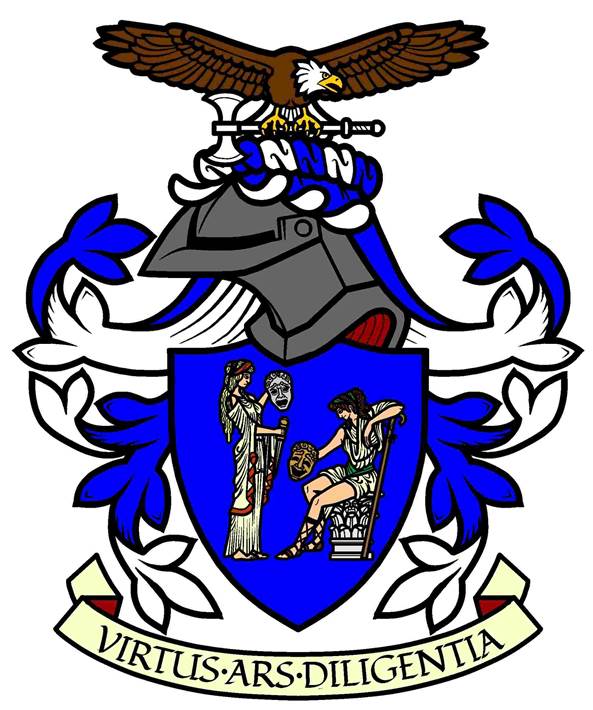
The shield (technically called an escutcheon and often referred to as the coat of arms) is the central element of the achievement and serves as the primary surface upon which the heraldic symbols, colors, and patterns are displayed. The shield’s design represents the family, individual, or organization bearing the arms, and it is typically divided into different sections, each containing symbols (called charges) that convey specific meanings about lineage, accomplishments, or values.
The shape of the shield can vary depending on regional styles, but its function remains consistent. The shield is the key area where the heraldic identity is displayed. The shield’s colors, charges, and patterns tell a visual story of the armiger’s heritage, achievements, and character. In medieval times, the shield design allowed warriors to be recognized on the battlefield or in tournaments.
On the shield are two Muses, Melpomene and Thalia. In Greek mythology, the muses symbolize inspiration, creativity, and the arts. They are the nine daughters of Zeus and Mnemosyne (the goddess of memory), each presiding over a specific domain of the arts, sciences, and literature. Collectively, the Muses represent the divine source of artistic, intellectual, and creative inspiration, often invoked by poets, musicians, and philosophers to aid in creating their work.
Each Muse is associated with a particular art or science:
• Calliope – Epic poetry
• Clio – History
• Erato – Love poetry
• Euterpe – Music and lyric poetry
• Melpomene – Tragedy
• Polyhymnia – Hymns and sacred poetry
• Terpsichore – Dance
• Thalia – Comedy and pastoral poetry
• Urania – Astronomy
Symbolically, Muses embody the ideal forms of creativity and knowledge, encouraging and guiding human endeavors in the arts and sciences. They represent that artistic and intellectual accomplishments are inspired by a higher, almost divine, source.
The Muses Melpomene and Thalia represent two contrasting forms of dramatic art: tragedy and comedy. Melpomene, the Muse of Tragedy, symbolizes drama’s somber aspects. She is often depicted holding tragic masks, a sword or dagger, and wearing a crown of cypress, all of which emphasize the themes of suffering, sorrow, and the human condition’s darker emotions. Through these symbols, Melpomene embodies the depth and intensity of tragic storytelling, focusing on themes of loss, fate, and catharsis.
Thalia, the Muse of Comedy, represents humor, lightheartedness, and joy in drama. She is typically portrayed holding a comic mask and a shepherd’s crook or ivy wreath, symbolizing comedy’s playful and pastoral elements. Thalia’s imagery evokes the lighter side of the human experience, where laughter, wit, and celebrating life’s pleasures are at the forefront.
Today, these two muses are symbolized by the masks they hold. The masks represent the performing arts, highlighting the duality of theater and the arts while representing the full range of human emotions, from the most profound tragedy to the highest joy.
George’s shield or coat of arms is blue, symbolizing loyalty, truth, wisdom, and strength. The Muses Melpomene and Thalia were selected because George worked in the performing arts for most of his working years. Not only did he work, but his sons also worked in the performing arts as stagehands. George and his sons are lifelong members of the International Alliance of Theatrical Stage Employees (IATSE). The IATSE is a labor union representing workers in the entertainment industry, including stagehands, technicians, and artisans who work behind the scenes in live theater, motion pictures, television, and trade shows. Founded in 1893, IATSE advocates for its members in the performing arts and entertainment sectors.
 Echo's of Our Ancestors
Leave a comment