
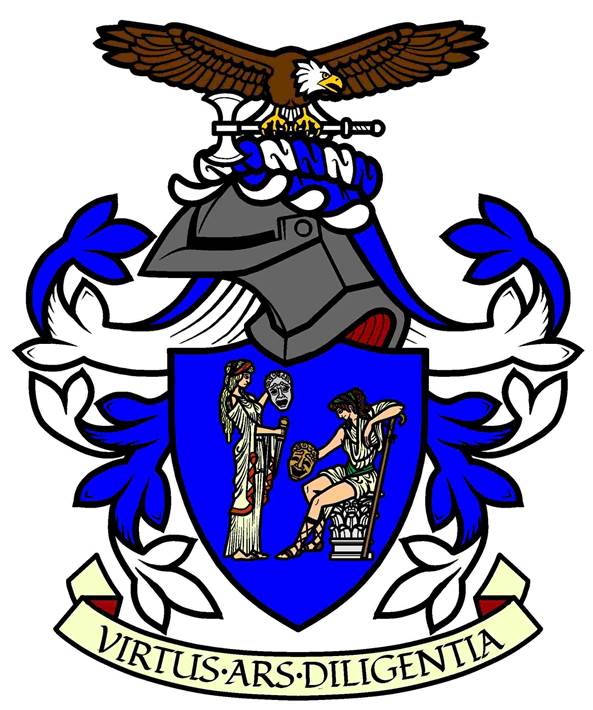
The colors (tinctures) of the torse, mantling, and helmet hold symbolic characteristics. Blue (known as azure) symbolizes loyalty, truth, wisdom, and strength. It is often associated with qualities such as steadfastness, trustworthiness, and a sense of justice. Blue is commonly used to represent calm and reliable traits in the armiger (the person bearing the coat of arms), and it suggests a dedication to duty and responsibility. Silver or white (argent) symbolizes purity, innocence, sincerity, and peace. It often represents truth, honesty, and integrity, conveying a sense of virtue and clarity in the armiger’s character. Silver is also associated with wisdom and calmness, reflecting the noble qualities of the bearer.
The torse, also known as the wreath, is a twisted band of fabric that sits atop the helmet and beneath the crest in a coat of arms, usually consisting of two alternating colors that reflect the primary colors (or tinctures) from the shield. Historically, it may have originated from the cloth wrapped around a knight’s helmet for protection against the sun or as a decorative feature. The torse holds symbolic significance, representing a knightly origin while supporting the crest and visually connecting it to the helmet. Its alternating colors further reinforce the family’s heraldic identity, uniting the key elements of the design.
The mantling, also known as lambrequin, is a decorative element in heraldry that flows from the helmet in a coat of arms, often appearing as a cloth with tattered edges to symbolize a battle-worn fabric. Historically, it represented the cloth knights wore over their helmets to protect them from the sun and help prevent damage during combat. In modern heraldry, the mantling is purely ornamental, with its torn appearance signifying experience in battle. The colors of the mantling typically reflect the primary colors of the shield, visually connecting it to the overall design, as it flows elegantly around the helmet and sometimes beneath the crest, adding a sense of movement and grandeur to the coat of arms.
The closed helmet with the visor shut represents lower-ranking nobility, knights, or warriors, symbolizing a more modest rank than the higher nobility, who often bore open, grilled helmets. Turned to the side, it traditionally signifies an armiger of lesser status, such as a warrior. The material of the helmet also holds significance. When depicted in silver (or argent), it represents virtues such as purity, sincerity, and peace while indicating a lesser rank in the heraldic hierarchy than those with gold helmets. This combination of a closed, side-facing, silver helmet provides a solid visual message of integrity and honorable service balanced with humility in rank.
 Echo's of Our Ancestors
Leave a comment