
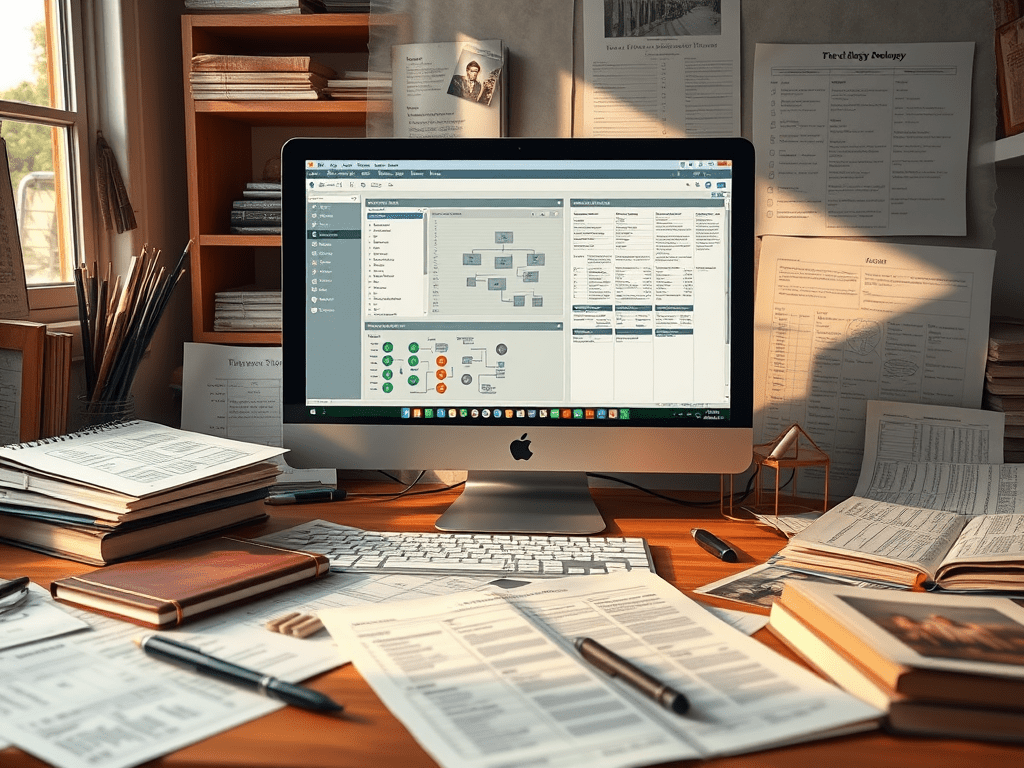
Once you gather more family information, you’ll likely reach a point where paper records and handwritten charts become hard to manage. That’s a great time to move your research into genealogy software. As your family tree expands beyond two or three generations, it becomes much easier to track relationships, dates, and places using a digital tool. You’ll notice the difference, especially when working on multiple branches at once—software keeps everything organized in one place, so you’re not flipping through notebooks or sorting stacks of papers.
When you begin documenting sources or double-checking facts, the software shines. Most programs let you attach records and citations directly to people or events, helping you keep everything accurate and traceable. Plus, if you’re researching online or using sites like Ancestry or FamilySearch, many tools can connect with these services, making importing records or getting hints simple.
If you want to share your tree with family members, print out charts, or publish your findings, the software makes that process seamless. Before making the switch, organize your notes, label essential documents, and decide how you want to build your digital tree. Once you’re ready, choosing a program that fits your needs, whether simple and free or full-featured and professional—will help you keep your research clear, accessible, and growing.
Even after you move your family history research into a software-based system, paper forms still play an essential role. They give you a reliable backup in case something happens to your digital files, and they’re convenient when you’re away from your computer. Whether visiting a local archive, digging through old photo boxes, or sitting down with a relative to swap stories, paper forms let you jot down notes quickly and keep your thoughts organized without distractions.
Pedigree charts and family group sheets are beneficial for visualizing relationships at a glance or sharing your progress with relatives who prefer something tangible. Research logs help you track what you’ve searched, where you found it, and what questions still need answers—keeping your workflow focused and efficient. Even as you enter everything into your software, paper forms give you a flexible, portable way to plan, solve problem-solve, and stay grounded in your research. They’re not old-fashioned. They’re just good tools that still work.
 Echo's of Our Ancestors
Leave a comment